- Portfolio ▼
- | Blog
- | Affiliate discounts
- | Guestbook
- | Info
- | Contact
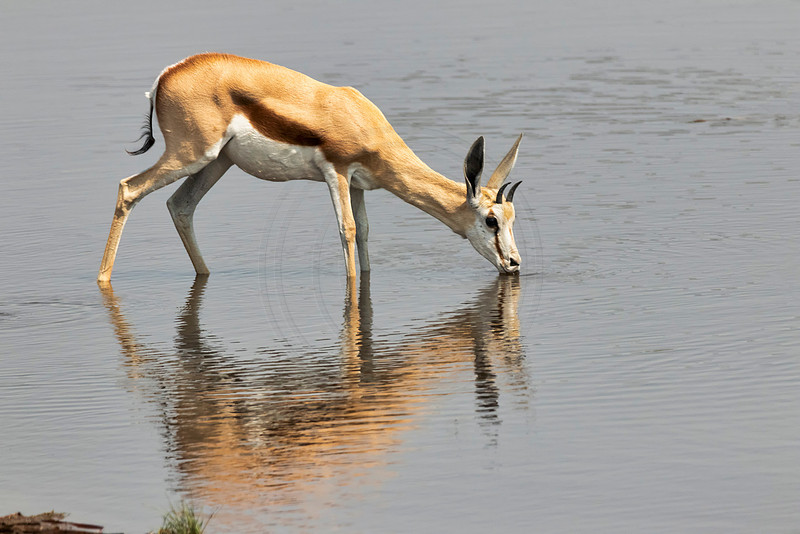
Wildlife photography tipsDuring August I will be co-teaching a wildlife safari workshop in Zimbabwe and Botswana. Having grown up in South Africa I love to photograph wildlife. My wife and I owned time-share inside a game park and spent many wonderful weeks there, year in and year out. During the next few weeks, I will talk about photographing wildlife. Today we will focus on the gear needed. Cameras There are two main characteristics we look for when selecting a camera for wildlife photography. Firstly, the autofocus speed is very important. Some cameras focus slowly and they do not have the ability to lock onto and follow fast moving subjects. Get a camera with a reputation of being able to autofocus really quickly. Secondly, look at the camera's frame rate; how many images per second can the camera take. The higher the better. With wildlife things can happen very quickly. To get the right moment one has to take pictures as fast as you can. As a bonus, many wildlife photographers use APS-C cameras; crop sensored cameras. This gives you a narrower field of view. Since animals typically remain far away from us we need to be able to "reach" them to fill the frame with the animal. The narrower field of view gives lenses extra reach. A 400mm lens effectively becomes a 600mm lens on a crop camera. A recommendation for Sony shooters is the A6400. It is not stabilized but the long lenses have stabilization. Lenses One can never have too much reach for wildlife. On the other hand, large animals can come right up to you. Zooms can therefore be nice to have. Personally, I use two cameras when photographing wildlife. On one of them, I cover from 200-600mm, on the other one I cover 70-200mm. This way I am covered almost for anything. Placing the 200-600mm on an APS-C (crop camera) gives me the coverage of 300-900mm. Unfortunately, that leaves me with a gap between 200mm and 300mm which I just have to live with. Long lenses are expensive. The bigger the aperture the more expensive the lens (the heavier too). These large aperture lenses give you the ability to use faster shutter speeds. If you have lots of money and take photography seriously you may want to invest in a 500mm or 600mm f. 4 or f. 4.5. These large apertures blur your backgrounds much nicer to make the animal or bird stand out from a silky smooth background. For the budget conscious, a 150-600mm zoom or thereabouts does the job. Sigma and Tamron have well-priced models out in this range. If the rumors are correct Sony may have a 200-600mm f. 5.6-6.3 out or announced by the time you read this. Memory cards and batteries Take many memory cards. When shooting at 10 or so frames per second your memory cards will fill up quickly. A Lion or a kill can happen at any moment. Check how much space you have left from time to time. If you don't have 200 or more shot available before your card is full swap it out. The last thing you want is to run out of space just as the Lion grabs its prey. Also, check battery levels from time to time. Swap out your battery before it gets too low for the same reason as mentioned above. We will talk about camera and lens settings next week.
Comments
No comments posted.
Loading...
|
Subscribe
RSS
Archive
January
February
March
April
May
June
July
August
September
October
November
December
|