- Portfolio ▼
- | Blog
- | Affiliate discounts
- | Guestbook
- | Info
- | Contact
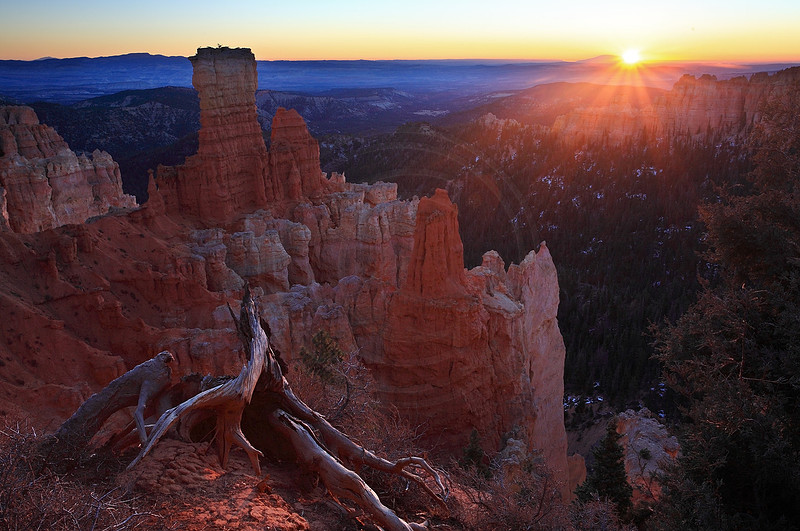
Landscape does not always refer to GrandscapeLast week we looked at composition. One of the points made was that we often like to include something of interest right in the foreground. We want the viewer to start there and moving into the image. Many people mistakenly think that landscapes have to be grandscapes. In some sense, they think, there must be some grand scene; a scene that wows. Please remember that that which creates the wow factor is usually the light or drama and rarely the scene itself. Millions of people visit the iconic photographic spots and shoot billions of images every year. Yet most of those images shot of the very same scenes are not great shots. What then separates good photographers' shot from that of the millions of visitors'? Take Bryce Canyon for example. In 2012 Bryce Canyon was visited by 1,385,352 people. If each visitor took just ten images then Bryce was photographed 10.38 million times in 2012. One would expect awesome images yet only a very small percentage of the images taken by non-photographers are good photographically and have any sense of wow. Why is this when they had access to a grandscape? Firstly, as has been said before, photographers shoot in good light while most non-photographers shoot when they get there after the good light is gone and they usually leave later afternoon before the good light returns. Secondly, people get so taken by the grandscape in front of them that they just start shooting as if the grandscape by its self is going to produce great shots. Once photographers know basically what they want to shoot they actually forget about the grandscape in front of them. They look for foreground elements to include to create depth. Yes, that little flower or log is just as important in making your shot as the scene. Look at this image:
We want a strong foreground to catch the viewer's eye. We want the viewer's eye to go to the middle ground and then to the background, and then back to the foreground again. We want to lead the viewer into our image from front to back. In this image the roots form the foreground, the rock formation the middle ground and the sun the background. We make the roots look much bigger and more important than what they are by using a wide angle lens and placing the camera right close to them. The roots were placed on a third line to the left while being balanced by the sun on the right. Next time look for foreground elements. Foreground elements add depth. They also help to make your image unique. Who wants a shot that every other photographer has? By including and featuring a foreground element you end up with a shot of the grandscape that no one else has; it is different. Happy hunting for foreground elements. Remember, it is not always only about the grandscape. Comments
No comments posted.
Loading...
|
Subscribe
RSS
Archive
January
February
March
April
May
June
July
August
September
October
November
December
|