- Portfolio ▼
- | Blog
- | Affiliate discounts
- | Guestbook
- | Info
- | Contact
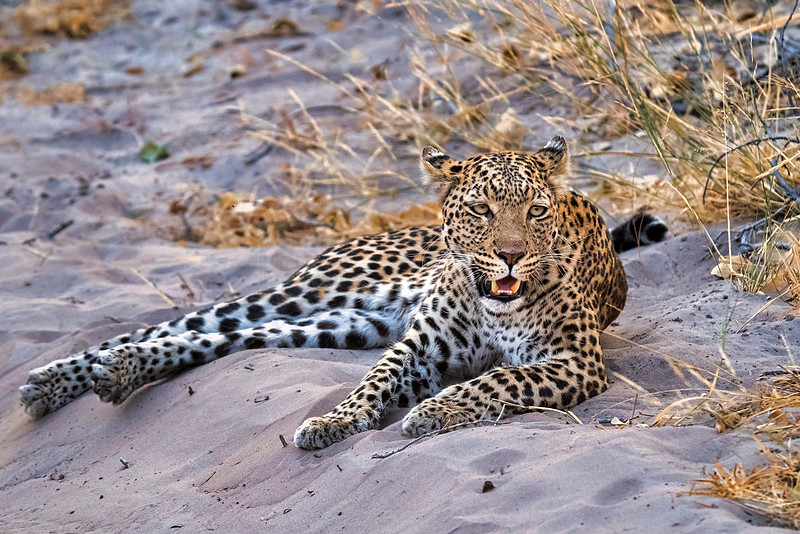
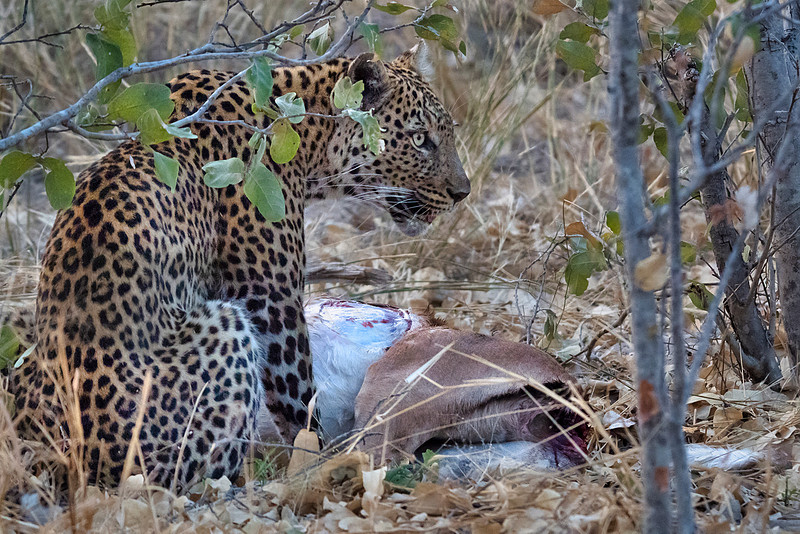
Get the shotIt was close to sunset. We were driving near Savuti in Botswana. A Leopard was spotted some distance away and we were in a race against time to get there before the sunset. As you can see from the image, we did get there BUT there was no sun and the light was failing quickly. We had to work fast to prevent too high ISO images. Most of our workshop participants had long lenses on which had to be changed because we got reasonably close to the leopard. On trips like this, I carry two bodies. One camera stays married to my 200-600mm while the other stays married to my 70-200mm. This gives me the flexibility to be ready for things far away and close by. Moments like this often don't last long. Not only was the available light getting pretty dim but we had to get back to camp before a certain time. The Leopard was exhausted and panting. It had just killed an Impala. There were no tall trees around to carry its catch into for safety. It had to rest up quickly and eat before other preditors arrived. After a few minutes, it got up and started working on its dinner. I did manage to get a few usable images of that too, but that was it. We had to leave and the light was no longer any good.
This is when it is important to know your kit and bag well. You need to be able to find the lens you want with one touch. You need to be able to work as quietly as possible. This is not the time to drop things. It is a good practice to practice quickly and quietly exchanging gear. We ended up getting our images that night. But being ready and able to quickly change lenses and settings is vital as you will see next week. The next day we met up with another Leopard and witnessed a kill. It happened in seconds, it took its catch and disappeared in the brush on its way to a hill. Many missed that opportunity because of missing these lessons.
Comments
No comments posted.
Loading...
|
Subscribe
RSS
Archive
January
February
March
April
May
June
July
August
September
October
November
December
|