Shutter Speeds and Landscapes

January 27, 2019  •  Leave a Comment

For a lot of landscape photography the shutter speed plays second fiddle because depth of field tends to be more important. There are times when the shutter speed is crucial to get the look you want. For example, if you want to show water drops frozen in the air you will need a fast shutter speed and when we want to smooth out water we use long shutter speeds. Perhaps the wind is blowing and we need to freeze the flowers in our foreground to get them sharp. In this case, we will also want to use a faster shutter speed. These uses of shutter speeds are obvious. However, sometimes the use of shutter speed for creative effect is not so obvious and requires experience and pre-visualization. Here are a few such cases:

  • The scene is dark because of omonous storm clouds. The sun is shining on a patch of cloud because of a hole in the cloud cover. That patch of lit cloud is blown and the dymanic range of that spot and the rest of the scene is too much for the camera to handle. The clouds are moving reasonably fast as this is a storm. In cases like this I have successfully used a long shutter speed to solve the problem. A long shutter speed allows that patch to move during the exposure so that the bright spot's exposure is lowered (it moves so the bright spot's position changes so that the same position in the frame is not bright throughout the whole exposure time).

  • A thin layer of nicely colored cirrius clouds are starting to rise above the mountain I am photographing. This is the perfect case for using a neutral density filter to get a long shutter speed. As the clouds move up into the frame during the expore they create streaks of clouds pointing right to the mountain. This needs to be pre-visiualized and created with a very long shutter speed.

  • A small stream is gushing over some rocks or a waterfall creates a bit of mist. We want to axagerate the flowing water or the mist. So we use a long shutter speed to allow more time for the camera to capture the flow or the moving mist. The longer the shutter speed the more exagerated the effect will be.

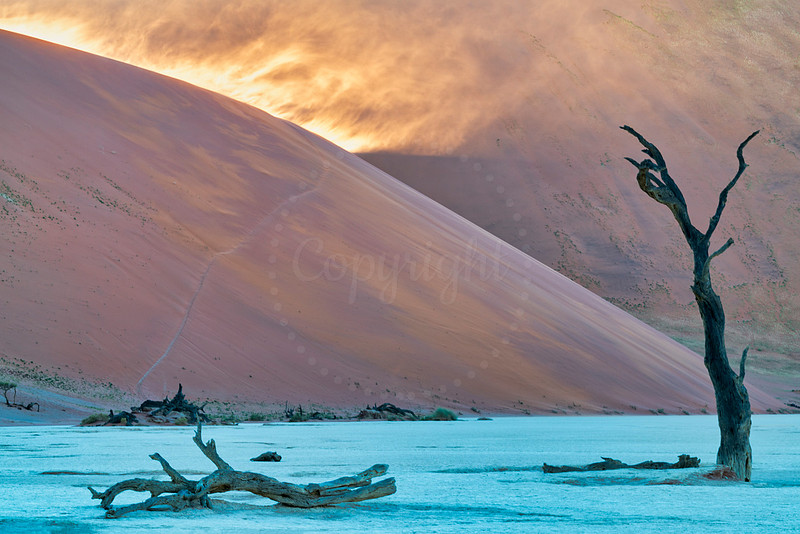
  • Sand is faintly blowing and you want to show the effect and exagerate it. A long shutter speed does the trick.

Here is an example. The wind is blowing the sand. The sun is coming up and shining through between two sand dunes and lighting the blown sand up. The longer I leave the shutter open the more blown sand the camera will capture - thereby exagerating the effect. Nothing else in the image is moving so a long shutter speed is not going to effect anything else in the image.

          Think more about the shutter speed and using it creatively in your landscape imagery.


Comments

No comments posted.
Loading...
Subscribe
RSS
Archive
January February March April (3) May (5) June (4) July (5) August (4) September (2) October November December
January (4) February (4) March (5) April (3) May (4) June (2) July August September October November December
January February March April May June July August September October November December