- Portfolio ▼
- | Blog
- | Affiliate discounts
- | Guestbook
- | Info
- | Contact
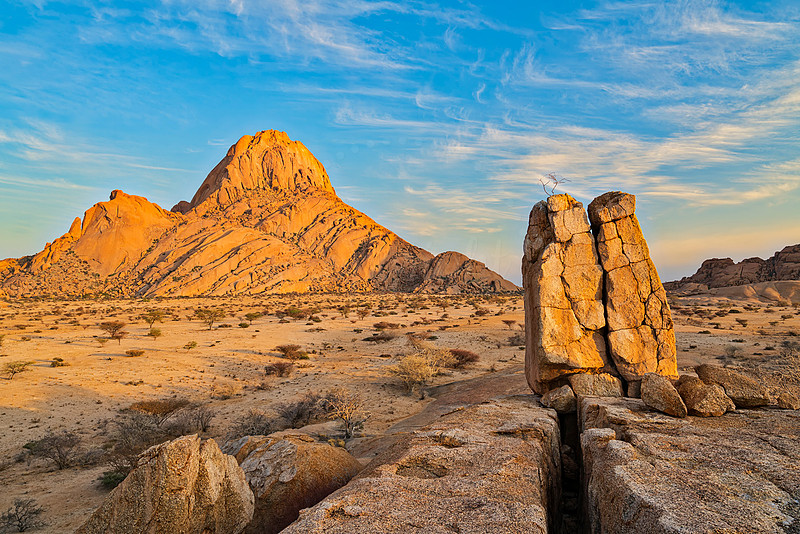
Balance, lines and depthLandscape photography often requires balance. Different colors have different weights. Darks are heavier than lights. Objects have weight. If all the weight is on one side of the image the photograph may not look balanced. Balanced images are often more pleasing than unbalanced images unless the imbalance is there on purpose to create tention or drama (which is less frequently the case). When you are out looking for good compositions looks for things that can being balance. You cannot move the mountain in the background but you can move yourself to place foreground elements in the right position to bring about balance. You can also use lines to create balance. In addition to balance they may also create depth if they run into the image. Let's look at an example:
Here you can see that the mountain on the left is heavy but that weight is balanced by the rocks in the foreground. There is more rock on the right bottom to balance out the weight of the mountain in the top left. The line (crack in the rock) leads the viewer's eyes into the image thereby creating depth. Leaving a bit of space between the foreground rocks and the mountain in the background also helps to create depth. Remember, we want viewers to look "into" our images rather than just looking at them from side to side.
In this image the stack of rocks on the left balance with the big rock on the right. The rock table in the foreground brings balance with the mountain in the background. The line on the left leads to the rock stack on the left, but there is a second line between the rock table and the big rock on the right that leads to the mountain. These lines take you eyes into the image. They help to create depth. When you are out looking for great landscape images look for balance. Find things in the foreground to balance with things in the distance. Look for and use lines, they are often powerful in aiding compositions. When on location, pay attention to where things point. Pay attention to balance and weight. Oh, and remember not to only be focused on one thing (if you have time to change your compositions). Look around you. Shoot both left and right. Shoot behind you. Be aware of what is happening to light and clouds. By doing so on this occasion I got two images instead of just one. Comments
No comments posted.
Loading...
|
Subscribe
RSS
Archive
January
February
March
April
May
June
July
August
September
October
November
December
|