- Portfolio ▼
- | Blog
- | Affiliate discounts
- | Guestbook
- | Info
- | Contact
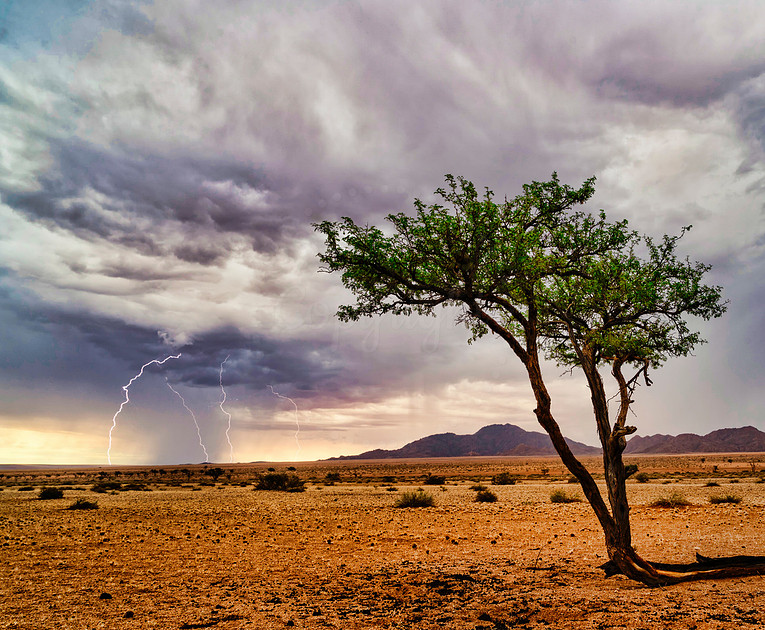
Multiple lightning strikes during the dayGetting multiple lightning strikes at night is easy; just leave the shutter open for a long while during a lightning storm. You can do that because it is dark and the image will not easily over expose unless there is too much lightning. Getting multiple strikes during the day is another matter (if you don't want your clouds blurred and your rain pocket to become more than just a pocket). Please see the last two blogs on lighting (a few weeks or so back).
You get the desired shutter speed by playing with your ISO and your 3 stop neutral density filter. I also add a polarizer which can add another stop or two if needed. That gives me some flexibility to get to my desired shutter speed. To trigger the camera at the right moment I use a lightning trigger (by Stepping Stone Products). Now I know this lighting trigger is expensive and I also know that there are many competitors that are much cheaper. The competitors may work reasonably well at night but firing your camera during the day is another story. Don Smith teaches a lightning workshop in the Grand Canyon and has seen all these triggers in action and concluded with certainty that this one is simply the best. Make sure your camera's focus is set to manual. You don't want the camera to check focus when the lightning trigger wants to fire your camera. By the time your camera confirms focus the lightning is gone and you just missed your shot. Lastly, check your camera shutter's delay. Only cameras with lightning fast delays are suitable to capture lightning during the day. The Sony mirrorless cameras are very fast and work well. Be safe! Always follow governmental guidelines on lightning and safety. Comments
No comments posted.
Loading...
|
Subscribe
RSS
Archive
January
February
March
April
May
June
July
August
September
October
November
December
|