- Portfolio ▼
- | Blog
- | Affiliate discounts
- | Guestbook
- | Info
- | Contact
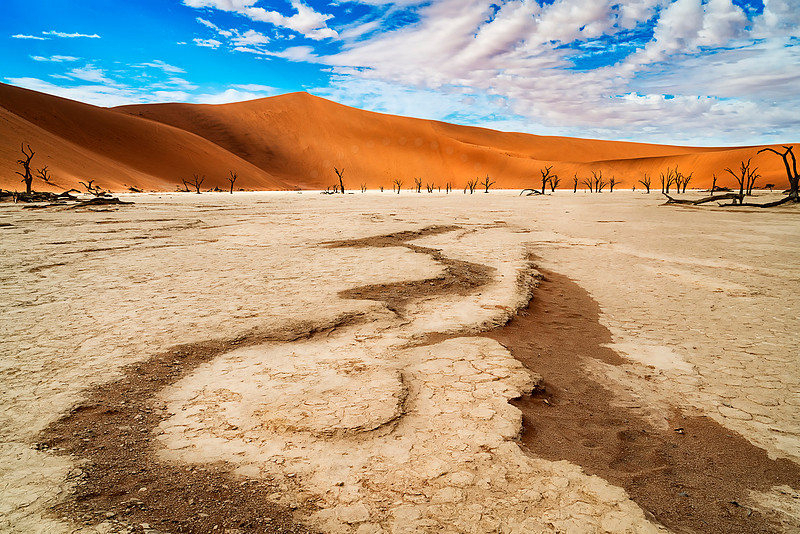
Combining lead-in lines with light drawing the viewer inOver the last month of so, we have been spending a lot of time with lead-in lines. By now you should know how important they can be for landscape photography. Many good landscape images either have lead-in lines or a strong foreground element. We have also stated in the past that a photographer can use light to draw the viewer into the image. Remember, that the viewer's eyes almost always go to the brightest part of the image first (sometimes to the most colorful). Having the best light in the background will then help draw the viewer's eyes to that background and thus into the image. Let's look at an example:
Now we begin to walk around looking for foreground elements and or good lead-in lines (that lead to the good light). What we want to achieve here is to find a good foreground element that can be placed in front of the scene with the good light or we need to find good strong lead-in lines that lead to the good light. In this way, we are combining two techniques that both draw the viewer into the image. It makes the image really strong compositionally. After we walk around a bit we find this spot. The lead-in lines are strong and they lead straight to the good light. We lower our vantage point because that makes these lines appear longer and it minimizes the space between where the lines stop and the trees begin. That space is dead, there is nothing happening there, so we want to minimize it. We take the image at a small F.Stop to get everything in focus. There you have the process that goes through my mind when I walk into the scene. By combining good strong lead-in lines with good bright light we end up with a winner. When we use two elements to lure the viewer into the image rather than just one, the image is just that much stronger. Comments
No comments posted.
Loading...
|
Subscribe
RSS
Archive
January
February
March
April
May
June
July
August
September
October
November
December
|