Elevation

March 12, 2017  •  Leave a Comment

Most people walk out to a scene and plonk their tripods down when they have selected a spot to shoot from. They then set everything up and shoot at eye level. For many images that is not a problem. However, have you ever thought of the difference elevation makes to your image? When will moving your camera lower down or higher up make a positive difference to the image? Changing the camera's elevation can make a huge difference to your images.

Lowering your camera:

  • Exaggerates elements in the foreground (they become more prominent). With a wide angle lens and lower elevation, foreground elements even look much larger than they would have looked shot from a higher elevation.

  • Minimizes the middle-ground. You can actually see less of the middle-ground the lower you go. Sometimes a middle-ground just does not offer much and can even be boring. By lowering your elevation that middle-ground becomes smaller and less impactful on the image.

  • Compacts the foreground and background. Because the middle-ground becomes less significant a lower elevation may compact the foreground and background. This does not mean that you cannot create depth but the elements used to create such depth need to be strong.

  • Tends to make more sky visible because you are shooting upwards. Now if the sky has something interesting to offer, great, but if the sky is dull and gray you may want to avoid shooting upwards.

Raising your camera:

  • Minimizes foreground elements a bit because you are moving further away from them.

  • Maximizes the middle-ground as you can see much more of it.

  • Creates more depth because of the long middle-ground. You just seem to be able to look into the distance.

  • You can better minimize the sky if you need to because you are shooting downward. You may not always want to do this as the sky may be great.

So when should we shoot from lower down or higher up?

  • Evaluate your foreground and ask yourself if it has anything you would like to give prominence to.

  • Evaluate your middle-ground and ask yourself if you would like to show it or minimize it.

  • Evaluate the sky and ask yourself if you want to include much or little of it (or even exclude it).

  • Evaluate your ability to create depth. Are there strong lines, or elements that can be used from shooting lower down or do you need height to create that vista feeling of looking into the future?

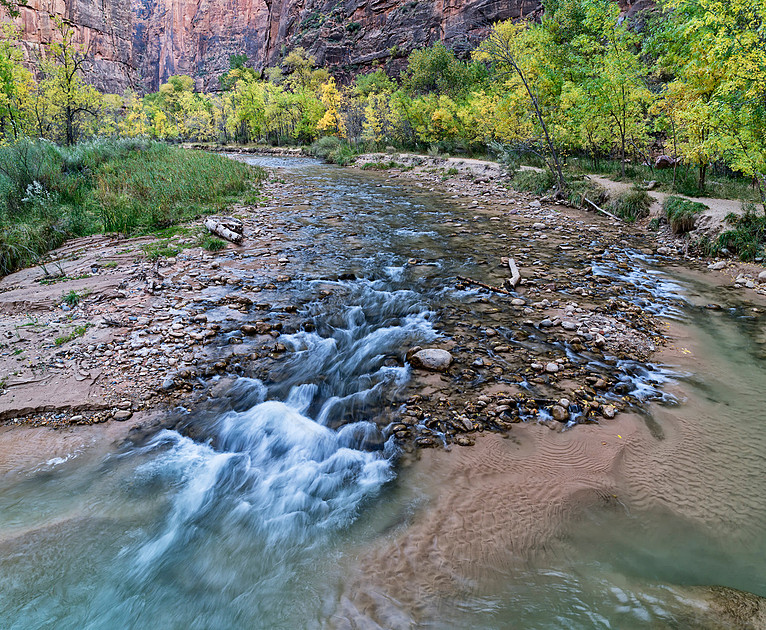
I climbed onto a large rock to gain some good height. In this case, it gave me great depth because now you can follow the river into the image. Height makes it possible to show more of the river. Shooting this image from lower down would have minimized the river and thereby I would have lost some depth. Furthermore, the sky starts just out of the frame and it was bright and overcast. There was no way it should have been in the image; it would have ruined the image.

          Elevation also makes it possible to change the height of foreground and middle-ground elements as compared to the background. If I shot this image from low down, the trees further back would have appeared much taller. To not include the sky I would have had to cut right through them with my frame. Height makes those trees appear shorter compared to the rock face in the background.

          The next time you put your tripod down, why not think about the height you choose to shoot from more deliberately?


Comments

No comments posted.
Loading...
Subscribe
RSS
Archive
January February March April (3) May (5) June (4) July (5) August (4) September (2) October November December
January (4) February (4) March (5) April (3) May (4) June (2) July August September October November December
January February March April May June July August September October November December