Wildlife photography tips: Part I - Setting up your gear

November 08, 2015  •  Leave a Comment

So you want to shoot wildlife. As discussed before a crop camera is preferred over a full frame camera. A crop camera has a few advantages in this arena. Firstly, it gives you more reach. Secondly, its autofocus points are typically spread out over the image better than a full frame camera's. Then you need long lenses, or a long zoom lens. Animals almost always seem to far to get a great image. When that is the case consider placing them in a landscape or as most people do, use a longer lens. Now that you have your camera and your long lens, let's get starting setting your camera up.

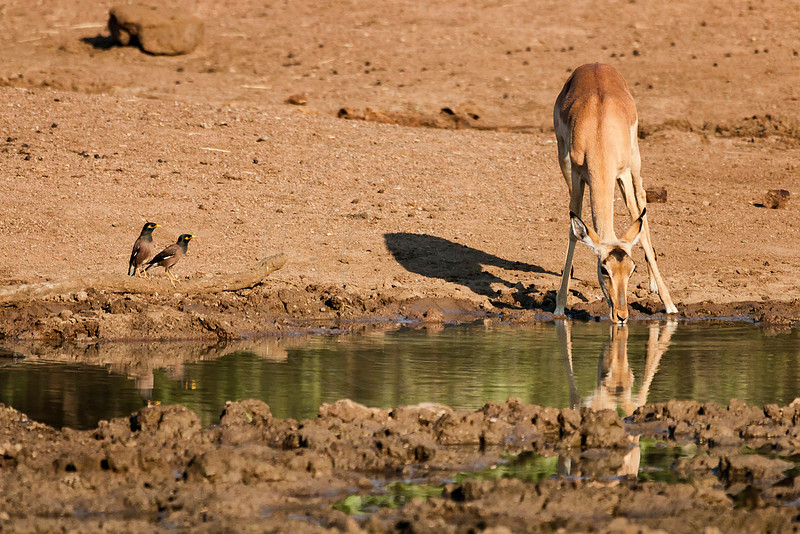
Here we have a scene of an Impala drinking water. Two birds are spectators. As you can see the animals are static; there is not much movement. Now what shutter speed do you think is appropriate to shoot this image with? Many novices would say: "well, if there is no movement you can shoot with a fairly low shutter speed." While it is true that the animals are not moving it is not true that there is no movement. Long lenses are heavy and therefore your gear is moving. It is not possible to hold heavy long gear still. Remember that just a little movement from your camera may shift your field of view by many feet where the animal is. So unless your gear is on a tripod or secured to something solid assume that there is always movement; your gear is moving. So make sure that your shutter speed is always faster than the focal length of your lens. In this case I used a 150-600 zoom, therefore I need to insure that my shutter speed is at least 600th of a second.

Typically we want the animal or bird to stand out from the background. We blur the background by using a large aperture (F.Stop). This also helps us achieve that fast shutter speed we need because a large aperture allow more light in which means we can use a faster shutter speed; just what we need for wildlife photography. Sometimes long lenses do not have a large enough aperture to allow you to get a fast shutter speed. If this is the case you may need to also raise your ISO.

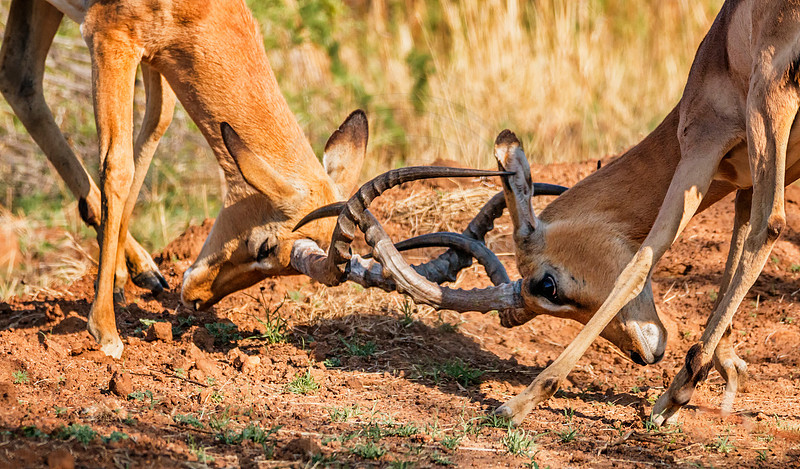
Most of the time animals and birds are on the move. They can move quickly. Shooting moving subjects successfully requires your autofocus system to be able to track their movement thereby keeping them in focus as they move. To achieve this set your autofocus on tracking (sometimes called servo). When these animals move around you will find it extremely easy to clip a horn or an ear or an eye. They jump this way and that way making it hard to track them. Your solution is to shoot at a high frame rate. Set your camera to shoot at the highest frame rate your camera is capable of. Shoot in bursts. You will delete most of your images but this is the only way to secure a few good ones in between the bad ones.

          To summarize:

  • Use a fast shutter speed (faster than the focal length of your lens)

  • Use a large aperture

  • Raise your ISO if needed

  • Set your autofocus system on tracking

  • Use a high frame rate (for example 7 shots per second)

          Lastly, things can happen suddenly. You are driving in the car and all of a sudden a lion appears. When that happens you do not have the time to fiddle with your settings. So just check your exposure settings from time to time as you notice the light change. Just point your camera at the grass or trees, press your shutter half way and see what your shutter speed comes out to be. If it is too low, raise that ISO. In this way you are always ready for the unexpected.

          That is basically it.


Comments

No comments posted.
Loading...
Subscribe
RSS
Archive
January February March April (3) May (5) June (4) July (5) August (4) September (2) October November December
January (4) February (4) March (5) April (3) May (4) June (2) July August September October November December
January February March April May June July August September October November December